It seems that any thoughts expressed about the Arizona ditch system that draws water from the Verde River generates a variety of knee-jerk reactions that are inaccurate or irrelevant.
The point made in the previous post was that the design of the diversion dam on the Verde River may be pushing more water through the Cottonwood Ditch than it is entitled to take.
I did not (1.) condemn the ditch system nor did I (2.) disparage the 300+ users of Cottonwood Ditch water. Although certainly possible, I did not (3.) question the environmental impact of the diversion dam.

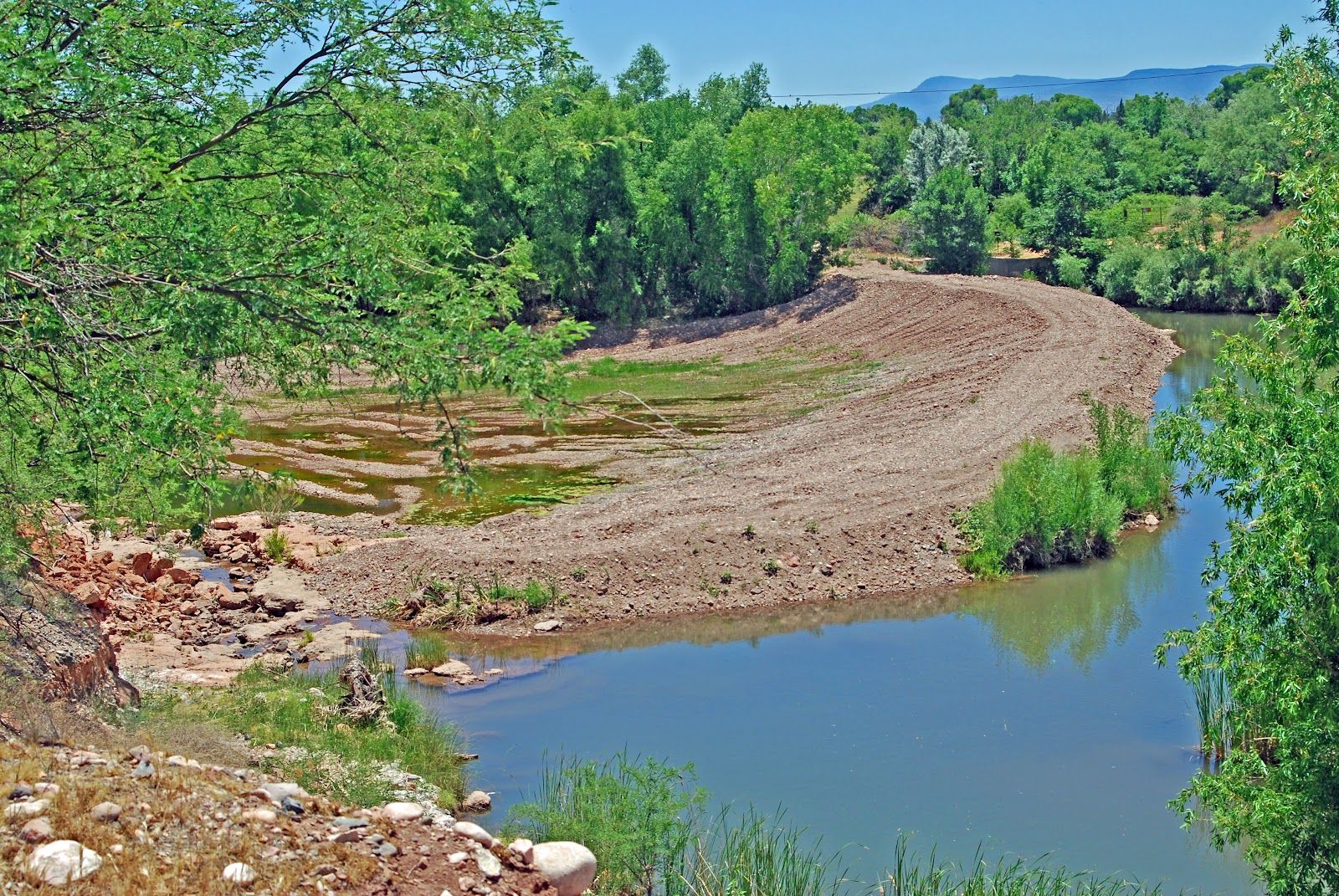
Google Earth Image taken June 13, 2011, showing the Cottonwood Ditch Assoc. diversion dam. Nearly 100% of the Verde River is blocked, diverting most of the river’s flow not along its natural course but to the Cottonwood Ditch. Various springs and seeps restore the river’s flow about 1,000 yds. downstream.
Others have concerns, as well.
Doug Van Gausig, Mayor of Clarkdale, entered comments into the minutes of the town council meeting of June 2007 regarding Mr. Grosetas activity.
"This summer the Cottonwood Ditch is again diverting 100% of the Verde River into their ditch, allowing only a trickle to bypass the diversion. This is a terrible thing for the river's habitat. It means that the river is no longer a viable corridor for transportation and migration of aquatic animals - the diversion becomes, in essence, an unnatural barrier to movements in the river. I talked to Greg Kornrumph, of SRP, and to Max Castillo and Les Bovee of State Parks (which operates the Hickey Ditch) about possible remedies for this situation. I'll continue to work on this issue with State Parks, FreeportMcMoRan and Cottonwood Ditch to find an equitable, legal and durable solution to this annual problem."
A suggestion made by Mr. Groseta is that “interested citizens and political leaders consider the adverse impact . . . trees and vegetation are causing to our river system. These millions of trees are sucking the river dry!", he asserts.
If this is the case, it’s surprising he has let trees and vegetation line the first mile or so of the Cottonwood Ditch. (He is President, remember!!!)
As the photo indicates, the river's water has disappeared because of the dam, not because of surrounding trees and vegetation.
Mr. Groseta's myopia may stem from all the trees that block his view of the forest.
The question should not be my qualifications but Andy Groseta's take from the river. It affects everyone.
NOTES:
1. I debated whether to continue the subject of this blog in the Verde Independent. A newspaper is not the format for on-going discussions of a subject.
2. Some respondents to my previous blog should learn the difference between insinuation and inference. I don't insinuate anything, but I can't control reader inferences.
NOTES:
1. I debated whether to continue the subject of this blog in the Verde Independent. A newspaper is not the format for on-going discussions of a subject.
2. Some respondents to my previous blog should learn the difference between insinuation and inference. I don't insinuate anything, but I can't control reader inferences.